
A practical starting point for pricing silent auction items is to set the opening bid at roughly 30% to 50% of fair market value, then choose bid increments that allow room for multiple competitive bids. The right numbers depend on the item, your audience, your auction format, and how much bidding activity you expect.Fair market value should be your reference point, but it should not be treated as a rigid pricing formula. A common restaurant gift certificate, a one-of-a-kind experience, and a consignment item may all need different starting bids.
This guide explains how to determine fair market value, choose starting bids, set bid increments, price Buy It Now options, and adjust your strategy for unusual or high-value items.
Fair market value forms the foundation of smart silent auction pricing. Before you can set those starting bids or bid increments, you need to know what your items are actually worth in the marketplace.
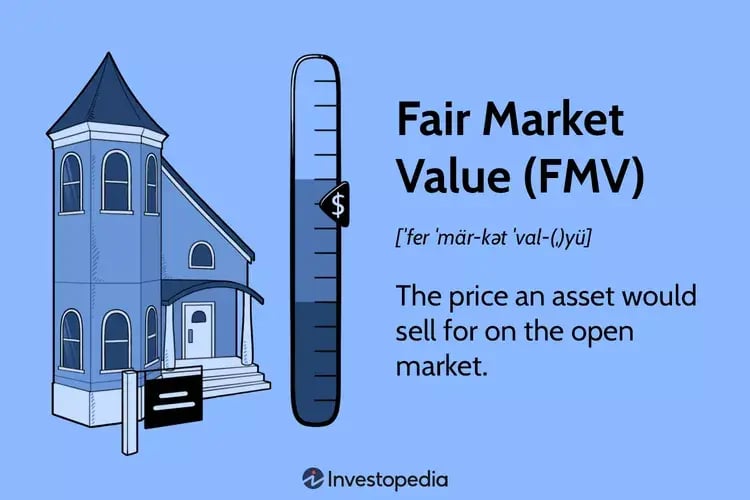
Fair market value is the price that property would sell for on the open market between a willing buyer and seller, with neither being required to act, and both having reasonable knowledge of relevant facts. For silent auctions, FMV serves as your reference point for calculating starting bids.
Getting FMV right matters beyond just setting good prices. There are significant tax implications to consider. Donors who purchase items at charity auctions may claim a charitable contribution deduction for the excess of the purchase price paid over the item's fair market value. If your organization sets FMV incorrectly, you could affect your winning bidders' ability to claim accurate tax deductions.
Donors who provide goods for auction often ask about claiming a fair market value deduction too. Under IRS guidelines, if the donated property will be sold (considered an "unrelated use"), the donor's contribution is limited to their tax basis in the contributed property rather than the fair market value.
credit: Mira Norian / Investopedia
Tangible items are usually easier to value since they typically have standard retail prices. A $100 restaurant gift certificate has an FMV of exactly $100. Still, you'll want to verify values through research:
Look up retail prices - For new items, check the manufacturer's website or major retailers
Research online marketplaces - eBay provides excellent reference points for valuing items, especially collectibles or memorabilia
Consult the item donors - They can provide context about an item's value, though be cautious of potential overvaluation if they have emotional attachment
Check comparable sales - The sales price of similar property in an arm's-length transaction is often the best evidence of value
Intangible items present more of a challenge since they lack standard retail prices. These might include travel packages, exclusive access opportunities, memberships, or once-in-a-lifetime experiences.
To establish reasonable values for intangibles, try these approaches:
Consider your audience demographics - Age, income, family situation, and other factors affect how your specific donors will value experiences
Analyze previous event data - Review what similar items fetched at your past auctions
Consult fellow fundraisers - Ask experienced colleagues how they've valued similar offerings
Research comparable experiences - Look for similar offerings in the market to gauge appropriate pricing
Setting accurate FMVs takes some work, but it pays off. You'll run a legally compliant, financially successful silent auction that maximizes donations for your cause.
Getting your starting bid right creates instant bidder interest and builds excitement throughout your event. Set it wrong, and you risk empty bid sheets and disappointed attendees. Once you know an item's fair market value, it's time to apply a proven formula that gets people bidding while maximizing your final donations. For a focused explanation of opening prices and examples by item value, see our guide to setting silent auction starting bids
The standard silent auction starting bid formula works like this: set minimum bids at 30-50% of the item's Fair Market Value (FMV). This range strikes the right balance between attracting those crucial first bidders and maintaining the item's perceived value.
A spa package worth $200? Your starting bid range falls between $60 (30%) and $100 (50%). This gives you flexibility based on your specific fundraising goals and audience.
Make bidding easier by rounding starting bids to the nearest $10, $100, or $1,000. Bidders appreciate clean numbers - it simplifies their mental math and creates cleaner bid sheets or digital displays.
The choice between the lower or higher end of the range depends on what you're auctioning and how much people want it:
Use closer to 30% FMV for:
Common or widely available items
Items with lower perceived value
When you want to generate maximum bidding excitement
Items that historically perform well through competitive bidding
Use closer to 50% FMV for:
Unique, rare, or exclusive items
High-demand or premium items
Items with limited bidder interest (only one or two potential bidders)
Items with high emotional appeal
Starting bid percentages require careful balancing - you want to draw in bidders without creating barriers that feel too high. Lower starting bids often create more excitement as participants feel they're getting a good deal, potentially driving the final price higher through competitive bidding.
Once you've set your starting bids, bid increments become your next key decision. These increments directly influence how exciting your bidding gets and how much money you ultimately raise.
Around 5% to 10% of fair market value can be a useful starting range for silent auction bid increments, but the percentage should be adjusted for the item, starting bid, audience, and auction format.
Instead of choosing the increment from fair market value alone, consider how many bidding steps you want between the starting bid and your target selling price. Smaller increments may encourage more participation, while larger increments can move bidding faster but may price some bidders out.
For a more detailed formula and examples, see our guide to setting silent auction bid increments.
Here's how to put this into practice:
Determine your item's accurate Fair Market Value
Calculate 10% of that value
Adjust if needed based on how popular the item typically is
Take a weekend getaway valued at $1,250 starting at $500. A $50 increment would allow about 13 bids to reach $1,150 (92% of FMV). Achieving 90% of FMV is considered excellent for charity auctions.
The math gives you precision, but real life calls for practicality. After calculating your increment, round to the nearest whole number or to convenient amounts like $5, $10, $25, $50, or $100. Your bidders and organizers will appreciate the simpler math.
As one expert puts it: "Make it easy on you and your guests and round the bid increment to the nearest whole number. Your bidders will thank you!"
Set increments too high and you'll price out potential bidders who might have jumped in at lower levels.
Here's what happens: with a $1,250 item starting at $500, a $75 increment automatically excludes anyone willing to pay between $500-$575 or $575-$650.
Mobile bidding platforms actually let you use lower bid increments compared to paper bid sheets. Bidders can tap their phones easily, making those frequent, smaller increases much more likely.
Buy-It-Now adds another tool to your silent auction pricing strategy. This feature lets eager bidders purchase items instantly at a premium price, skipping the bidding process entirely.
This instant purchase option works best in specific situations. Use Buy-It-Now when you have items with clear retail values that would benefit from immediate sales. This approach ensures items exceed their Fair Market Value (FMV) when bidding closes.
Buy-It-Now options serve multiple purposes:
They appeal to bidders who don't want to deal with bidding wars
They create immediate revenue throughout your event
They build excitement by creating scarcity
They work perfectly for impulse buyers
Buy-It-Now works especially well for items you have in multiple quantities, like gift cards or books. It's also smart for your less expensive valuable items, letting you focus attention on higher-end offerings during the event.
There is no single Buy It Now percentage that works for every silent auction item. The price should be high enough that the organization is comfortable ending competitive bidding immediately, while still being realistic for the audience and the item.
For items with a clear retail value, some organizations price Buy It Now above fair market value because the bidder is paying for certainty and immediate purchase. Unique experiences, emotionally appealing items, or items that historically generate bidding competition may be better left without a Buy It Now option.
A $50 restaurant gift certificate might have a Buy-It-Now price between $75 (150%) and $100 (200%). Concert tickets valued at $1,000 could feature a Buy-It-Now price around $2,000.
This higher price point creates a win-win situation - bidders get their desired items instantly, often exceeding what they might fetch in a bidding war, while your organization maximizes revenue.
Buy-It-Now isn't right for every auction item. Skip this option for:
Items with high emotional appeal
Unique or one-of-a-kind items
Experiences unavailable elsewhere
Items that historically create bidding wars
These special items typically generate more excitement and higher final bids through competitive bidding than through a preset Buy-It-Now price. Remember, when someone takes the Buy-It-Now option, all bidding stops - which can disengage other guests if you use it too frequently.
Some auction items need different pricing strategies to maximize your fundraising success. Here's how to handle the exceptions and fine-tune your approach.
Big-ticket items can drive serious revenue, so a higher starting bid of 40-50% of FMV makes sense. These premium items deserve premium presentation - display cases, spotlights, pedestals, or elegant fabric can make all the difference in how bidders perceive their value.
Consignment items work differently. Consignment items need a different calculation because the organization has a cost that must be recovered before the item generates fundraising revenue. Start by identifying the organization’s actual cost or required minimum payout, then set the opening bid high enough to protect that amount while still leaving room for competitive bidding.
For example, if the organization must pay $300 when an item sells, an opening bid below $300 could create unnecessary risk. The appropriate markup above cost depends on the item, demand, expected audience, and any additional fees.
Smart pricing gets better with experience. After each event, look at which items performed above expectations and which fell short. This data becomes your roadmap for future pricing decisions.
Your audience matters more than generic formulas. Understanding your supporters' income levels, interests, and spending patterns helps you price more accurately. Stay flexible during the event too - you can adjust pricing strategies based on how bidders respond.
Smart pricing can turn your silent auction from a decent fundraiser into your most successful event yet. Starting bids at 30-50% of fair market value create that perfect balance between attracting those first crucial bids and maximizing your final totals. Bid increments at 10% of FMV keep the momentum going without wearing out your bidders.
Your audience matters more than any formula. Knowing your donors' income levels, interests, and spending habits helps you fine-tune those starting percentages. The uniqueness of your items should guide whether you lean toward the lower or higher end of that range.
Buy-It-Now options at 150-200% of FMV can boost revenue, especially for items with clear retail value. Save competitive bidding for those special, one-of-a-kind items that create excitement and drive up final prices.
The most successful auctions learn and adapt. After each event, look at which items exceeded expectations and which fell short. This information becomes the foundation for your next auction's pricing strategy.
Your silent auction pricing strategy should grow with your organization's experience and your donors' expectations. Start with these proven guidelines, then refine based on your results. The right pricing approach will help you engage more participants and raise more funds for your important cause.
The recommended starting bid for silent auction items is typically 30-50% of the item's fair market value (FMV). This range helps attract initial bidders while maintaining the item's perceived value. For common items, start closer to 30%, while unique or high-demand items can start closer to 50%.
Bid increments should generally be set at 10% of the item's fair market value (FMV). This creates a balance between encouraging participation and maximizing returns. For practical purposes, you can round the increments to convenient denominations like $5, $10, or $25 to simplify the bidding process.
A Buy-It-Now option is best used for items with a clear retail value that would benefit from an immediate sale. It's particularly effective for items available in multiple quantities or less expensive valuable items. Set the Buy-It-Now price at 150-200% of the item's fair market value to ensure significant profit from immediate sales.
For big-ticket items, consider setting a higher starting bid of 40-50% of the fair market value. Unique or emotionally appealing items often perform better through competitive bidding rather than using a Buy-It-Now option. Also, take into account your audience demographics, including income levels and interests, when pricing these special items


Mo-Fri 9 am to 5 pm Eastern Time
24/7 critical emergency support
All currencies supported

