Successfully procuring items for a nonprofit auction requires a strategic mix of networking, research, and the right tools. To excel in procurement 101, your organization must look beyond the basics and tap into the vast world of corporate philanthropy.Whether you’re looking for a weekend getaway package or a cash sponsorship, a data-driven approach is the key to unlocking corporate generosity.
In this guide, we'll cover:
As you begin your auction-planning journey, remember that corporate donors are often looking for the same thing you are: a meaningful way to make an impact. Transitioning from a general request to a targeted, mutually beneficial proposal will set the stage for a successful auction and a sustainable partnership to come.
Let’s begin!
When reaching out to corporate donors, it is important to offer a variety of ways for them to get involved. Corporate sponsorships typically fall into two categories: financial (cash) and in-kind (goods or services). A balanced procurement strategy should aim for a mix of both to maximize event ROI.
Offering a "menu" of sponsorship levels allows companies of all sizes to participate. A local boutique might provide a $200 in-kind gift basket, while a large corporation might prefer a $5,000 gold-level financial sponsorship. Providing choice makes it easier for potential donors to say yes.
The best place to start your search for corporate donors is often within your own database. Many of your existing supporters work for companies that have formal charitable giving programs. By identifying where your donors work, you can get your foot in the door with a "warm" lead rather than a cold call.
Reach out to your most engaged donors and ask if their employer would be interested in sponsoring your upcoming event. A company is much more likely to approve a request when it is championed by one of its employees. This approach also allows you to mention that their employee is already a dedicated supporter of your cause, providing immediate social proof.
Once you’ve identified these internal connections, you can tailor your outreach to highlight the specific impact the company’s employees are already making. This data-driven strategy ensures that your corporate partnership requests are relevant and personalized, significantly increasing your chances of a positive response.
Quick Tip: Look for donors who have already utilized their employers’ matching gift programs. These individuals work for companies with established CSR departments, making them prime candidates for broader sponsorship asks.
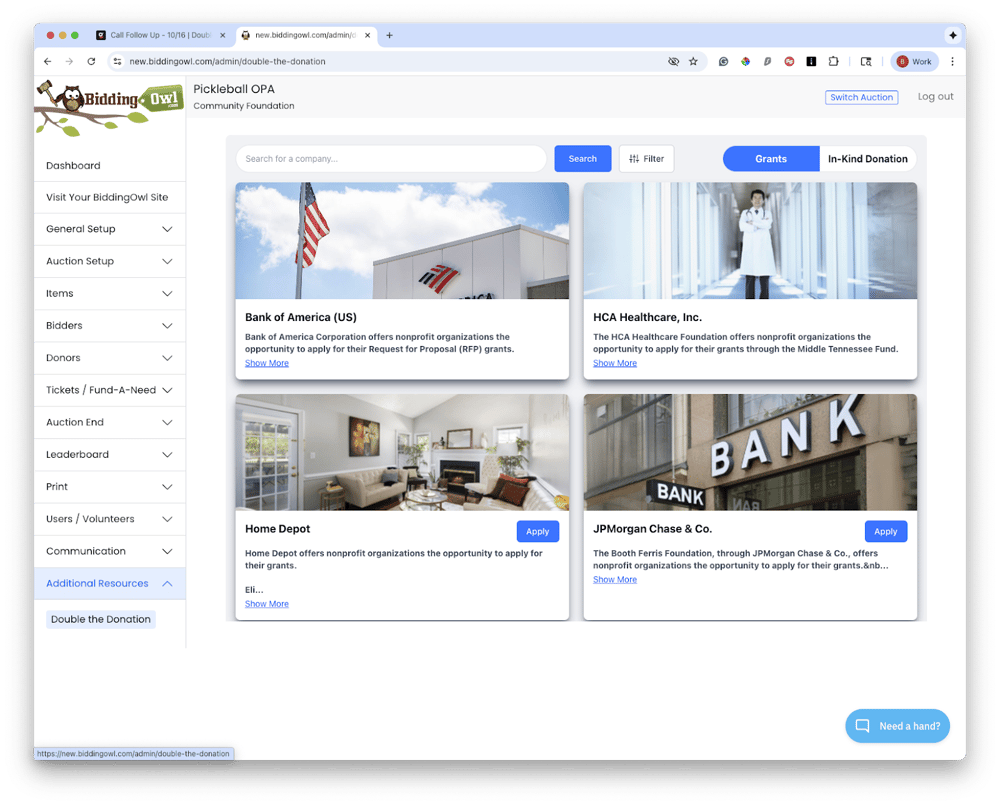
One of the most effective tools for finding corporate donors is the Double the Donation Sponsorship Directory. Because BiddingOwl is a directory partner, users can access this resource directly within their auction management platform. This integration enables you to search for thousands of companies that have already committed to supporting nonprofits through grants and in-kind gifts.
Even better? The directory provides a centralized location for application links, contact information, and specific giving criteria. Rather than spending hours searching for "companies that donate to auctions," you can filter the directory to find the perfect match for your event, whether that’s companies that offer in-kind donations for auctions or corporate grant programs that provide financial support for overhead.
Did You Know? Corporations gave more than $44 billion to nonprofits in recent years, but a significant portion of these funds is distributed through application-based sponsorship programs found in specialized directories.
By using Double the Donation’s integrated directory tool, you ensure that your procurement team is targeting businesses with an active interest in giving. This saves time and improves the overall quality of the items and sponsorships you can secure for your auction.
A corporate donation for an auction should be the beginning of a relationship, not the end. Many companies that provide auction items also offer other workplace giving opportunities, such as matching gifts and volunteer grants.
When a company sponsors your event, take the opportunity to educate them on these other avenues of support. If they are donating an item, ask whether they would also like to promote a matching challenge to their employees during the event. This creates a multi-layered partnership that benefits your organization year-round.
Key Takeaway: Procurement is the first step in a larger corporate engagement strategy. By using a fundraising tool to track employer data and sponsorship history, you can transform a one-time auction donor into a long-term partner.
To maximize your results and ensure your procurement team works efficiently, you need to shift from a "transactional" mindset to a "partnership" mindset. By implementing these foundational habits, you can streamline your outreach and build a professional reputation for your cause.
Here’s what we recommend:
Ultimately, successful procurement is about building a sustainable ecosystem of support that lasts long after the final gavel falls. By refining these internal processes now, you set the stage to unlock deeper revenue streams from corporate partners throughout the year.
Procurement 101 involves using the best resources available to connect with the right partners. In 2026, the organizations that succeed are those that treat corporate donors as strategic partners, using data and technology to create a win-win for everyone involved.
By leveraging donor employment information, incorporating the Double the Donation Directory, and offering flexible giving options, your nonprofit can build a world-class fundraising event. And remember: a well-procured auction is a testament to the strength of your community and corporate relationships.


Mo-Fri 9 am to 5 pm Eastern Time
24/7 critical emergency support
All currencies supported